Instagram bots: what they are, how they work, the risks to your account and the better alternatives
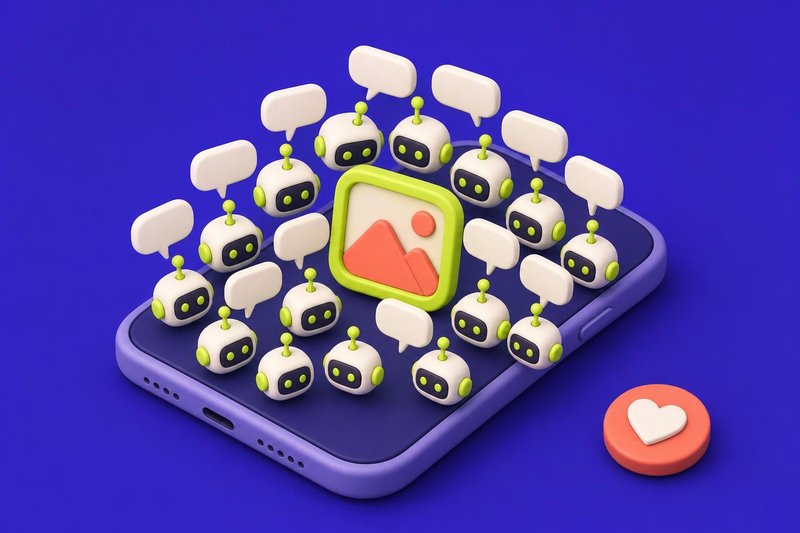
Somebody posts a photo of a hospital bracelet with a caption about a hard week. Two minutes later the first comment arrives: “Love this vibe! Check out our page.” That comment came from a bot on Instagram, one of the many Instagram bots still running in 2026, and anyone reading the thread can tell.
Instagram bots are the oldest shortcut on the platform, and they keep coming back under new names: growth services, engagement pods run by scripts, “AI Instagram assistants”. The pitch hasn’t changed in eight years. Pay a monthly fee, hand over your login, and the software will follow, like and comment on your behalf until the follower count climbs.
What Instagram bots are and how they work
A bot on Instagram is any software that takes actions on an account without a person deciding each one. There are two kinds, and businesses meet both.
The first kind is the fake account: profiles created in bulk, often with a stolen photo and a random handle, that exist to follow, like and leave generic comments. Follower packages (“1,000 followers for $9”) are mostly made of these.
The second kind is the automation tool: a service that logs into your real account and acts for you. You give it targets, usually hashtags, locations or the followers of a competitor, and it works through the list:
- following accounts and unfollowing them a few days later if they don’t follow back
- liking recent posts under a hashtag
- leaving short comments picked from a template (“Great shot!”, “So inspiring!!”)
- sending automated welcome DMs to new followers
- viewing stories in bulk so your handle shows up in other people’s viewer lists
Instagram bots of both kinds are aimed at one thing: notifications. Every follow or comment puts your handle in front of somebody, and a small share of them follow back out of curiosity. That is the whole mechanism, and it explains why the followers it brings rarely buy anything.
The risks of using Instagram bots
It breaks Instagram’s rules
Instagram’s Terms of Use forbid accessing the service through unauthorized means, collecting information in an automated way without permission, and creating accounts or taking actions in a fake or misleading way. Meta’s Community Standards add a section on inauthentic behavior that covers fake engagement and coordinated likes or follows. Most bot services also require your password, which Meta’s own security guidance tells you never to share with a third-party app.
This is the risk that matters most, so it belongs at the top. Everything else on this list is a cost; this one can end the account.
Action blocks, reduced reach and bans
Instagram doesn’t publish its rate limits, and the numbers passed around in growth forums (150 likes an hour, 60 follows an hour) are guesses, not policy. What is documented is the result. Accounts that act faster than a person could get a “Try Again Later” action block, then temporary restrictions, then removal for repeat offences.
The quieter penalty is reach. Since 2022 professional accounts have had an Account Status screen (Settings, then Account Status) that shows whether content has been removed or marked as not eligible for recommendation. A content creator who suddenly vanishes from Explore and hashtag pages, the effect people call a shadowban, should look there first. Automated activity is one of the triggers.
The comments embarrass the brand
Bots read hashtags, not captions. They can’t tell a wedding from a funeral, so they leave “Love this!” under a memorial post and “Amazing work!” under someone asking for help after a burglary. Each of those comments sits under your logo, in public, on somebody else’s post.
The followers are worthless
A thousand followers gained by bots are, at best, people who followed back out of politeness and will never see your posts again. At worst they are other bots. Either way your engagement rate drops, because the follower count rises while likes and comments stay flat. Instagram reads a low engagement rate as a sign that the content isn’t interesting, which pushes reach down further.
The feed and the data stop working
An account that follows 5,000 random profiles gets a feed full of strangers, which matters if the owner uses Instagram to keep up with customers and peers. Insights stop meaning anything too: a spike in followers tells you nothing about which post worked.
Better alternatives to Instagram bots
Spend twenty minutes a day replying
The cheapest alternative is the boring one. Block out twenty minutes, answer every comment on your last few posts, reply to story mentions, and leave real comments on posts from accounts your customers follow. A real comment of ten words beats a hundred bot replies made of fire emoji. The guide on replying to every comment explains why the first hour after posting matters most.
Hand the engagement work to a person
When twenty minutes a day isn’t possible, the alternative to a bot is a human. A virtual assistant or social media manager costs more than a bot subscription and can read the caption before commenting. Give them a short tone guide and a list of accounts and hashtags that matter to the business.
Pay Instagram instead of a bot service
If the goal is to be seen by new people in a niche, paid promotion does openly what bots do against the rules. A boosted post or an ad through Meta Ads Manager can target by location, interest and lookalike audience, and the people it reaches are real. The basics of running Facebook ads apply to Instagram placements too.
Use the tools Meta approves
Scheduling is not the problem. Publishing tools that connect through Meta’s official API, including Meta Business Suite, Later, Buffer and Hootsuite, are allowed and save hours. The line is automated likes, follows, comments and DMs.
Grow the account with hashtags and content that fit
Finally, the slow route works: hashtags chosen for the audience rather than for volume, content planned around what the account is trying to achieve, and a posting rhythm that can be kept up for months.
Would you rather have 500 followers who buy from you, or 5,000 who never open your stories? The question answers itself once it’s written down.
What to do if a bot service has already used your account
Change the Instagram password, then open Accounts Center and the Apps and websites section in your settings and remove anything you don’t recognize. Turn on two-factor authentication. Check Account Status for restrictions, and remove the “Love this!” comments the tool left behind if you can find them in your activity log. Reach usually recovers within a few weeks of the automation stopping, though Instagram gives no timetable.
If the account was used for spam DMs, a short story explaining that it was compromised is better than silence. People who got a strange message from your handle will wonder.
Quick answers
What is a bot on Instagram?
A bot on Instagram is software that runs an account, or part of one, without a person behind each action. It follows, likes, comments, sends DMs or views stories automatically, usually based on hashtags, locations or the followers of a competitor. Some bots are fake accounts; many are scripts that log into a real business account.
Can Instagram tell if you use a bot?
Yes, in most cases. Instagram looks at the speed, volume and pattern of actions, the device and location of logins, and whether the app or an unofficial client is used. Bursts of identical comments or hundreds of follows an hour are easy to spot. The usual result is an action block, reduced reach or a disabled account.
Are Instagram bots illegal?
Not illegal in most countries, but they break Instagram's Terms of Use and its rules against inauthentic behavior. The risk is to the account, not a court case: Meta can limit, suspend or remove accounts that use automation it has not approved.
Do scheduling tools count as Instagram bots?
No. Tools that publish posts through Meta's official Content Publishing API, such as Meta Business Suite, Later, Buffer or Hootsuite, are allowed. The line is crossed by tools that automate likes, follows, comments or DMs, or that ask for your Instagram password instead of connecting through Meta.
More in Instagram